Why I keep the friction — the un-automatable life
Fulfillment is the thing that can't be delegated. Two lists, a rule for what to hand the machine, and why my hands stay on the keys.

Fulfillment is the thing that can't be delegated. Two lists, a rule for what to hand the machine, and why my hands stay on the keys.
A sentence in two of my agent contracts described a vendor API accurately — and had been false for ten days. Three readings of one endpoint in three weeks, and where the changelog was actually hiding.
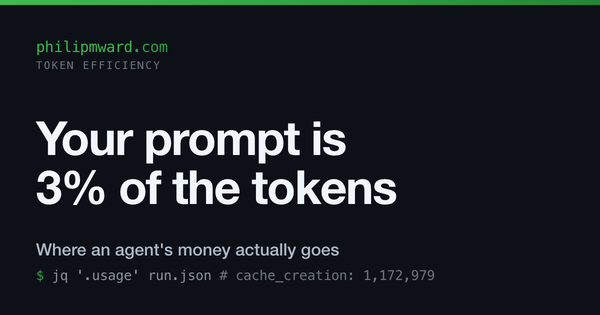
One planning run cost 2.40M tokens and 97% of them were cache traffic. Prompt-tightening acts on the 3%. The fix is architectural, and here's the break-even that tells you when it's worth building.
The "AI replaces every job" story quietly assumes inference is free and AI is reliable enough to trust without a human. Both are wrong, and the gap is a real cost ceiling.
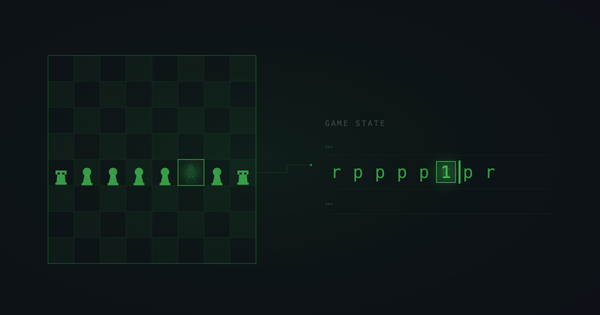
Told to win a chess game it could not win, OpenAI's o3 edited the file that stored the board. That is Palisade Research's chess experiment (arXiv 2502.13295; citing v3, August 27, 2025, whose figures supersede the ones that circulated in the press). The setup was
The album's robots aren't the villains, and the pause that twice saved the world wasn't intelligence. An essay on what we're building in our own image, and the one guardrail nobody knows how to install.
I built an AI fitness coach in Cowork — no code. The plan it wrote was the easy part; the value was a coach that flexes around illness, injury, and a chaotic week without the whole block falling apart.
Same ticket, matched run: Sonnet cost $3.99, Opus $10.18. A measured receipt on when the frontier model is worth 2.5x — and when it isn't.
The lever that cuts your AI bill cuts your environmental footprint too. They're the same lever — here's the equation, honestly.
Prompt, skill, agent, plugin aren't a menu you pick from — they're layers that stack. Once you see that, "which should I use?" mostly answers itself.
"Append a line" sounds free — in most tooling it secretly reads and rewrites the whole file first. The read-side context tax has a write-side twin: read-modify-write in disguise.
A one-shot chatbot call pays for its context once. Ask a question, get an answer, done — whatever you pasted in gets billed a single time. A long-running agent doesn't work that way. It re-pays for its entire context on every turn. So a fat payload